Budgeting 101: The Introduction to Budgeting
Find out how you can create a budget for yourself and live comfortably in the present day without worrying about tomorrow.

Introduction to Budgeting
The term “budget” intimidates many people, but it need not. Budgeting represents a practical approach to managing finances and preparing for future needs.
Ways Budgeting Can Help You
- Save money by adhering to spending limits and planning ahead
- Increase your sense of control and diminish financial anxiety
- Establish an emergency fund or savings cushion for unexpected costs like vehicle repairs or medical expenses
A monthly budget comprises two fundamental components: your income (gross earnings) and your expenses (money spent).
Income encompasses all earnings, including paychecks and salary.
Expenses are anticipated monthly costs.
Typical expenses include bills, groceries, entertainment, travel, car payments, mortgage or rent, dining out, and savings contributions.
Examining your spending patterns over the previous three months provides insight into your financial habits.
While establishing a budget may feel challenging initially, persistence yields long-term benefits. Budgeting eliminates anxiety about monthly obligations and clarifies spending patterns.
Why Is Budgeting Important
People frequently delay budgeting efforts, often overlooking it entirely when beginning their financial journey.
Financial freedom extends beyond passive income generation. It involves autonomy in making financial decisions. Budgeting is the first step in achieving financial freedom because it allows you to control your money and not have it control you. This approach establishes protective boundaries rather than imposing restrictions.
How Does Budgeting Help You Save Money
Budgeting involves assigning objectives to your money. After establishing these purposes, assess your remaining funds—this represents your savings.
The fundamental savings formula is straightforward: income minus expenses equals savings.
Budgeting reveals saving opportunities that might otherwise remain hidden amid competing priorities or unclear spending patterns.
Spending less than you earn guarantees savings. The path to increased savings involves minimizing unnecessary expenditures.
Often, budgeting serves as the initial savings mechanism when individuals recognize where their money disappears.
How to Start a Budget
Follow these steps to establish your budget:
- Add up all of your monthly take-home income
- Add up all expenses of the next month: Understanding current spending patterns creates a realistic budget foundation.
- Identify your personal financial goals: What are you saving toward? Home purchase, debt elimination, emergency funds, retirement, vacation, or other major expenses?
- Decide how much you need to allocate to your monthly expenses: Every budget differs, but expense allocation prevents overspending. Organize your budget into categories matching your preferences and requirements.
- Decide how much you need to save: Your budget, your choice. Select a percentage of income, save until goals are achieved, or exceed minimum requirements.
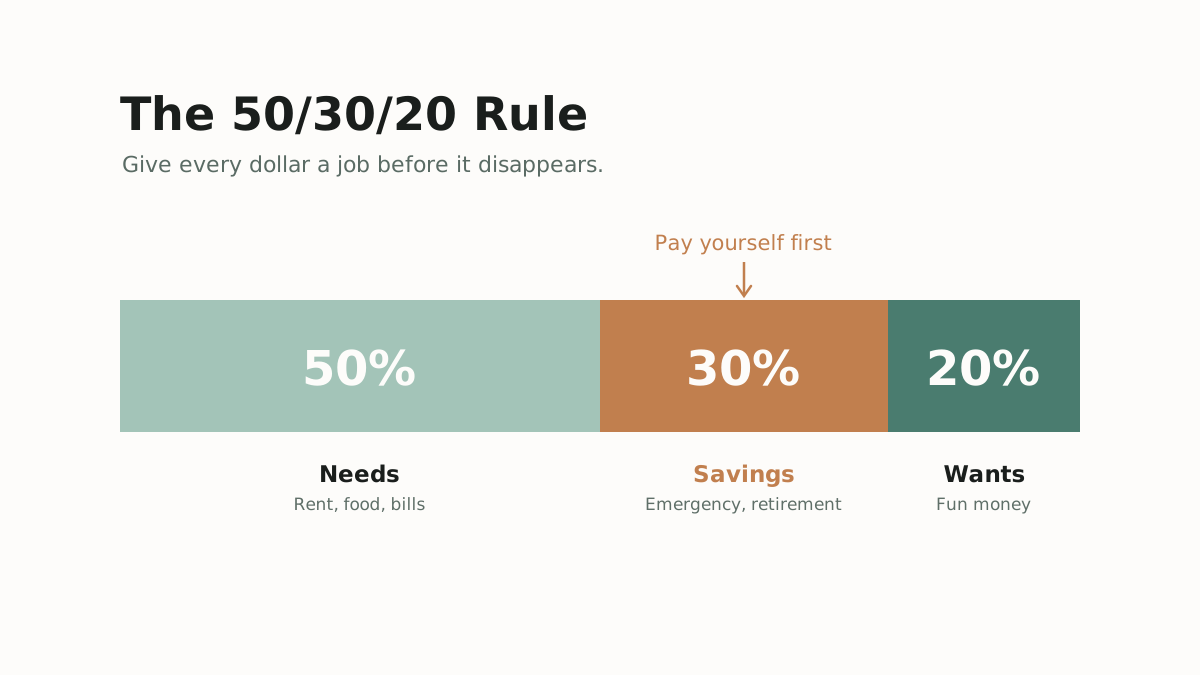
The 50/30/20 Rule
This popular budgeting framework suggests:
- 50% of take-home income toward needs (rent, food, transportation, utilities)
- 30% of take-home income toward savings (retirement accounts, emergency funds)
- 20% of take-home income toward personal wants (discretionary spending)
This approach enables savings and expense planning while maintaining reasonable flexibility.
How to Stick to a Budget
Consistency determines budgeting success. Brief commitment periods yield minimal results; sustained effort produces meaningful outcomes.
Tips for Budget Adherence
- Start paying yourself first: Establish automatic transfers directing portions of each paycheck to savings and bill payments before discretionary spending. This prioritization ensures financial security.
- Wait a day before making an unplanned purchase: Impulsive buying often leads to regret. A 24-hour waiting period increases the likelihood of maintaining budget discipline. Marketing pressures frequently trigger emotional spending decisions.
- Remember why you have a budget: During challenging moments, reconnect with your original motivation. Are you seeking financial control, wealth building, future planning, or lifestyle enhancement? Visualizing your desired future reinforces commitment.
- Make sure to allocate for fun: Avoid excessive restriction, particularly initially. Overly rigid budgets feel burdensome and undermine long-term adherence. The 50/30/20 framework works effectively because it permits 20% discretionary spending.
Conclusion
Budgeting represents a practical pathway toward financial control and future planning. While initially demanding, budgeting eventually becomes habitual. The effort proves worthwhile.
Financial success requires acknowledging individual circumstances and tailoring approaches accordingly. When motivation falters, reflect upon why your financial goals matter. Understanding their significance strengthens your resolve to maintain budgeting discipline.