The hidden tax that's making you slower
You can see exactly what you want to create. The vision is crystal clear. Every detail, perfectly formed in your mind.
Then you sit down to execute.
And what comes out is… not that. Not even close.
The gap between imagination and reality feels like a disappointment. Like you can see exactly where you want to go, but can’t figure out how to get there.
I lived this frustration daily.
Your taste is why your work disappoints you
Ira Glass said something that changed how I think about this:
“All of us who do creative work, we get into it because we have good taste. But there’s a gap. For the first couple years you make stuff, it’s just not that good. But your taste — the thing that got you into the game — is still killer. And your taste is why your work disappoints you.”
Read that again.
You can recognize quality before you can produce it. That recognition is the compass that guides improvement.
But here’s where most people go wrong:
We try to leap over the gap instead of walking through it.
Calculus before multiplication
I caught myself in a pattern I’ve repeated for years.
I was frustrated because I couldn’t do something complex. Something I’d never actually learned the foundations for. I just assumed I could skip ahead because I understood it conceptually.
I was trying to do calculus before I’d mastered multiplication.
Think about how absurd it would be to walk into a calculus class having never learned basic arithmetic. You’d be completely lost. Not because you’re stupid. Because you skipped the prerequisites.
Yet we do this constantly:
Fitness: You want the transformation photos before you’ve built the identity of someone who shows up consistently.
Content: You want viral posts before you’ve written hundreds that nobody read.
Career: You want senior-level respect before you’ve developed junior-level mastery.
Wealth: You want investment returns before you’ve built the habit of saving.
Master the fundamentals completely before expanding.
Most people do the opposite. They dabble in everything, achieve mastery in nothing, and wonder why nothing compounds.
The FOMO is suffocating
Here’s what makes this harder than it’s ever been.
We’re living in an era of unprecedented acceleration.
Claude Code builds a functional app in 30 seconds.
AI generates articles, images, and videos at scale. Tools that took years to master now have one-click solutions.
You scroll through X and see someone shipping their third product this month. Someone else just raised funding for an idea they had last week. Everyone seems to be moving at warp speed while you’re still figuring out the basics.
So what do you do?
You try to match their pace. You skip foundations. You rush.
That’s exactly when you start paying the Impatience Tax.
The paradox of powerful tools
The faster the tools, the more important foundations become.
When everyone has access to Claude, ChatGPT, and Midjourney, what differentiates you?
Not speed. Everyone can be fast now.
It’s taste. Judgment. Depth of understanding.
AI can generate a thousand blog posts in an hour. It cannot give you the lived experience that makes your perspective worth reading.
Claude can create an entire application. It cannot tell you which problems are actually worth solving.
The tools amplify whatever you bring to them.
Bring shallow understanding, you get polished mediocrity that looks like everyone else’s.
Bring deep expertise, you get output that actually compounds.
You can’t shortcut thinking and judgment. Those come from foundations.
The true cost of impatience
Impatience isn’t faster. It’s significantly slower.
Every time you skip foundations, you’re not saving time. You’re borrowing it at a terrible interest rate.
I call this the Impatience Tax.
It’s the “shortcut” that creates technical debt you spend weeks to months untangling.
It’s the relationship you rushed that now feels like hell.
It’s the business idea you launched before validating, now sitting in your graveyard of abandoned projects.
It’s the surface-learned skill that crumbles the moment you face a real challenge.
I’m paying this tax at work right now.
Responsibilities hitting me from every direction. Multiple stakeholders. Constant context-switching.
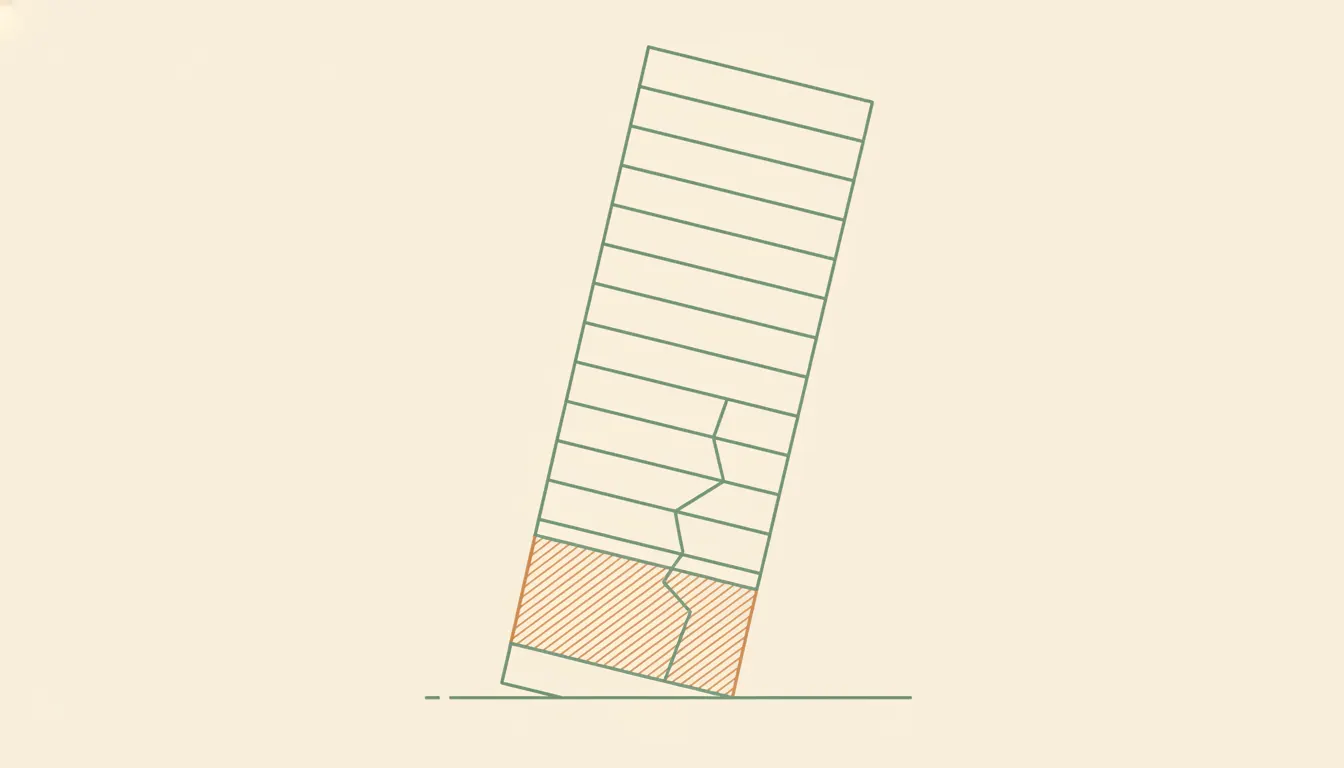
When I got honest with myself, I realized some of this chaos exists because I tried to run before I could walk in certain areas. I optimized for speed over depth. Now the foundations are shaky while the building keeps getting taller.
When impatience actually works
Now here’s where I need to add a nuance…
Impatience has a place.
There’s a specific situation where impatience is exactly what you need:
Paralysis by analysis.
When you’re stuck in endless planning. Reading one more book before starting. Listening to one more podcast. Waiting for conditions to be perfect.
In those moments, impatience is your friend.
Just act. Ship the ugly version. Learn by doing.
The problem isn’t taking action quickly.
The problem is skipping the learning that action is supposed to produce.
Here’s the distinction:
Impatience that breaks paralysis: Good. Necessary.
Impatience that skips foundations: Expensive. Counterproductive. Possibly catastrophic.
Know which one you’re in.
If you’ve been sitting on an idea for six months, waiting to feel ready then impatience is medicine.
If you’re trying to run advanced plays before understanding the basics then impatience is poison.
Frustration is your compass
When you feel frustrated because your output doesn’t match your imagination, you have two choices:
Quit. Decide the gap is proof you don’t have what it takes. This is what most people do.
Embrace the process. Accept that the gap is the path, not the obstacle. This is what works.
The gap doesn’t close by wanting it to close.
It closes through volume. Through reps. Through showing up when the work doesn’t match the vision.
Ira Glass again: “The most important thing you can do is do a lot of work. Put yourself on a deadline so that every week you finish one story. It’s only by going through a volume of work that you close that gap.”
How to stop paying the tax
Zoom out on the destination, zoom in on today.
Keep the vision. You need it for direction.
But stop measuring yourself against it daily.
Measure yourself against yesterday.
Did you improve 1% from your last attempt?
The destination is a compass. The process is the path.
Treat frustration as data, not defeat.
When you feel that friction, don’t run from it. Look into it.
Ask yourself: “What foundation am I missing?”
Usually, the answer becomes obvious once you stop resisting it.
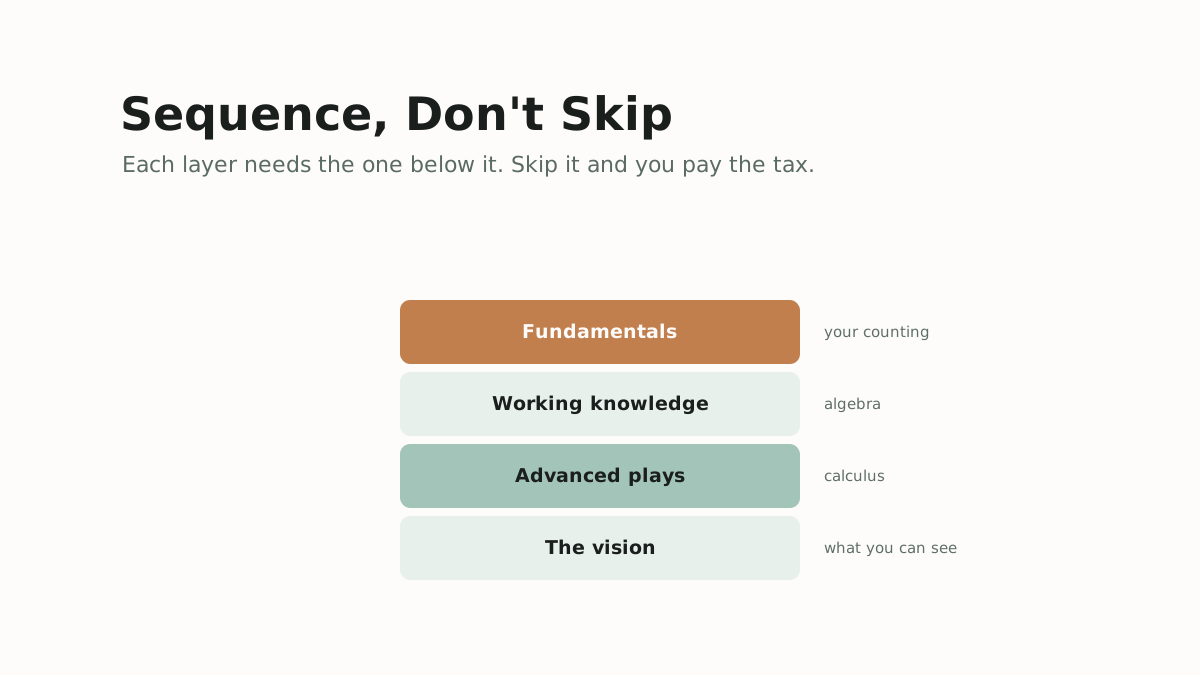
Sequence properly.
Calculus comes after algebra. Algebra comes after arithmetic.
What’s your “counting” right now?
Identify the most fundamental skill in whatever you’re trying to master. That’s the only work that matters until it’s solid.
Let the tools amplify, not replace.
Use AI to move faster on things you understand deeply.
Don’t use it to skip understanding or outsource your thinking altogether.
The goal is to become the kind of person whose judgment AI can amplify.
Fall in love with the boring parts.
The sexy stuff (the vision, the end result) is what gets attention.
But the boring parts are where the magic happens.
Can you find genuine interest in the fundamentals? In the basics everyone else is too impatient to master?
That’s your edge.
The compound effect of foundations
James Clear writes:
“You do not rise to the level of your goals. You fall to the level of your systems.”
Your systems are your foundations.
When you invest in them:
Your skills compound instead of crumble.
Your confidence comes from competence, not hope.
Your growth accelerates because each new skill builds on solid ground.
When you skip them:
You constantly rebuild from scratch.
You plateau early and wonder why you’re stuck.
The tools expose your weaknesses instead of amplifying your strengths.
I’m writing this as a reminder to myself as much as to you.
I’m going back to basics in areas where I’ve been paying the Impatience Tax. It’s humbling. It feels slow.
But “slow” is faster than “fast, then stuck, then starting over.”
The world will keep accelerating. AI tools will keep getting more powerful. The temptation to skip ahead will only intensify.
Let it.
While everyone else rushes to use the same tools in the same shallow ways, you can build something they can’t copy.
The frustration you feel is not your enemy.
It’s your next area of growth.
Embrace the process. Trust the sequence. Fall in love with the boring parts.
That’s how the gap closes.
— filed under programming, January 2026

David Vo
Writing about mindset, purpose, money, and building with AI, from Montreal. Breaking free from autopilot, one system at a time.
Related articles
The GenAI Guide: How to Actually Use AI (Without the Hype)
A plain-English, model-agnostic guide to using AI at work and in life. What an LLM is, why it's for you, how to pick and test models yourself, and the guardrails that keep you in charge.
The Boredom Advantage: Why Your Inability to Be Bored is Killing Your Breakthroughs
Boredom isn't a void to be filled - it's the loading screen for your next breakthrough. Learn the science behind dopamine depletion, why the world's greatest thinkers engineered empty space, and a practical reset protocol to reclaim your focus.