Letters from a Stoic
Key Takeaway
You don’t have a time problem. You have a waste problem. Seneca’s letters are a 2,000-year-old intervention for anyone who’s ever said “I don’t have enough time” while scrolling through their phone for the third hour that day.
The Big Picture
- Life isn’t short, we make it short by squandering it on things that don’t matter
- Your emotional reactions are optional. Anger, anxiety, envy, you’re choosing those whether you realize it or not
- External circumstances don’t determine your quality of life. How you respond to them does
- Difficulty isn’t punishment. It’s training
Why This Book Matters
Here’s what you need to know about Seneca: he wasn’t writing a book. He was writing letters to his friend Lucilius, practical advice about how to actually live. How to deal with anger. How to think about death. How to stop wasting time on people and pursuits that drain you.
And because they’re letters, they hit differently than a formal treatise. It’s one friend writing to another saying hey, here’s what I figured out today. There’s an intimacy to it that makes the wisdom land harder.
I picked this up after reading Meditations, expecting more of the same. It’s not. Marcus Aurelius argues with himself in his journal. Seneca writes to a friend. Marcus is the emperor wrestling with his own mind in private. Seneca is the mentor breaking things down so clearly you feel stupid for not seeing it yourself.
Both are programming your mind. But Seneca is the better teacher.
What surprised me most was the relevance. These letters were written around 65 AD and they read like someone observed 2026 and wrote a manual for surviving it. The busyness epidemic. The anxiety about the future. The anger cycle on social media. The constant comparison. Seneca diagnosed all of it two millennia before we had a name for any of it.
Core Concepts
On the Shortness of Life
This is the big one. Seneca’s most famous argument and it’s devastating in its simplicity: life is long enough. You just waste most of it.
“It is not that we have a short time to live, but that we waste a great deal of it.”
Read that again.
We blow years chasing other people’s approval. We spend decades in careers we chose to impress people we don’t even like. We defer everything meaningful to “someday” while filling our days with noise that accomplishes nothing.
Sound familiar? Bill Perkins made essentially the same argument in Die With Zero, stop deferring life. But Seneca got there first. By about 2,000 years. And he said it with more precision in a single paragraph than most modern authors manage in an entire book.
I think about this whenever I catch myself being “busy” without being productive. There were months where I’d end every day exhausted but couldn’t point to a single meaningful thing I’d accomplished. Full calendar. Empty output. Seneca would’ve torn that apart, and he would’ve been right to.
On the Value of Time
Seneca treats time the way most people treat money, as the one resource you absolutely cannot afford to waste. But here’s the thing: people guard their money obsessively while handing out their time to anyone who asks.
Someone wants an hour of your day for a meeting that could’ve been an email? Sure. Someone wants you to spend your Saturday at an event you don’t care about? Of course. Someone wants you to scroll through outrage content for 45 minutes? Already done.
You wouldn’t hand a stranger your wallet. But you hand strangers your time constantly.
This is the original essentialist argument. Greg McKeown built an entire framework around “less but better.” Seneca said the same thing in one sentence almost two thousand years earlier. And Cal Newport’s obsession with protecting deep focus from shallow distractions? Seneca was already there, urging Lucilius to stop scattering his attention across trivial pursuits.
On Self-Sufficiency
Don’t build your happiness on a foundation you don’t control.
Seneca hammers this point across multiple letters. If your happiness depends on your job title, your relationship status, other people’s opinions, or your bank balance, you’re one bad day away from falling apart. True stability comes from within. From your character. From your ability to be okay regardless of what’s happening around you.
This isn’t the toxic positivity version where you pretend everything is fine. It’s building an internal baseline that external chaos can’t destroy.
On Anger and Emotional Control
Seneca wrote an entire essay on anger, and his core point is brutal: anger is temporary insanity. You surrender control of your mind to an emotion that almost never produces a good outcome.
Let’s be real: I needed this one. In business, in creative work, in relationships. I’ve had seasons where my default response to friction was reactivity. Something goes wrong and instead of pausing, I’d fire back. Every single time, the reaction made things worse. Not once did anger give me a result I couldn’t have gotten better through calm clarity.
Seneca’s framework is simple. Before you react, ask: Is this worth surrendering my peace for? The answer is almost always no.
On Friendship
Quality over quantity. Seneca was ruthless about this. He’d rather have one true friend than a thousand acquaintances.
A real friend tells you the truth even when it’s uncomfortable. A real friend challenges your thinking instead of just validating it. Everyone else is an audience, not a friend.
On Adversity as Training
“A gem cannot be polished without friction, nor a person perfected without trials.”
Seneca doesn’t just tell you to endure difficulty. He tells you to welcome it. Every hardship is a rep at the gym for your character. Comfort doesn’t build anything. Resistance does.
This reframe matters. When you see adversity as something happening to you, it’s crushing. When you see it as something happening for you, as training, it becomes fuel.
Premeditatio Malorum
Negative visualization. Imagine the worst that could happen, not to be pessimistic, but to be prepared. And more importantly, to appreciate what you already have.
Think about it. If you genuinely imagined losing your health tomorrow, you’d walk outside today and feel the sun differently. If you imagined losing someone you love, you’d put your phone down and be present with them tonight.
Seneca wasn’t being dark. He was teaching gratitude through contrast. And it connects to something I keep coming back to on this site, you’re living in the good old days right now. Seneca would’ve agreed completely. Stop waiting for life to get good. It already is. You’re just too distracted to notice.
What I’ve Found Most Useful
The letters-as-medicine approach. Don’t read this cover to cover. It gets repetitive if you try to power through it. Seneca circles back to the same themes, which makes sense when you remember these were individual letters, not chapters. Read one or two at a time. Let them sit. Come back tomorrow. That’s how they were meant to be consumed.
The morning audit. Seneca’s habit of examining how he spent his day, what was worthwhile, what was wasted, has been more useful to me than any productivity app. It takes two minutes. And it’s brutally honest in a way that a time-tracking tool never is, because you can’t hide from yourself when you’re writing it down.
The anger pause. Before reacting, wait. That’s it. Seneca’s entire anger management philosophy comes down to inserting a gap between the stimulus and your response. I’ve started counting to ten before replying to anything that triggers an emotional reaction. Sounds simple. It’s changed how I show up in difficult conversations.
The perspective of death. Not morbid, clarifying. When I’m stressed about something trivial, I ask myself: will this matter when I’m dying? The answer cuts through noise faster than any framework I’ve found.
Memorable Quotes
“It is not that we have a short time to live, but that we waste a great deal of it. Life is long enough, and a sufficiently generous amount has been given to us for the highest achievements if it were all well invested.”
“We suffer more often in imagination than in reality.”
“Luck is what happens when preparation meets opportunity.”
“Hang on to your youthful enthusiasms, you’ll be able to use them better when you’re older.”
Final Thoughts
I need to be honest about something: Seneca was a hypocrite. He preached simplicity and detachment from wealth while being one of the richest men in Rome. He wrote about the shortness of life while serving as advisor to Nero, one of the most destructive emperors in history. That tension is real, and pretending it doesn’t exist would be dishonest.
But here’s what I’ve landed on: the hypocrisy doesn’t invalidate the wisdom. If anything, it makes it more human. Seneca knew what was right and still struggled to live it. Sound familiar? That’s all of us. Knowing the answer and consistently living it are two completely different skills.
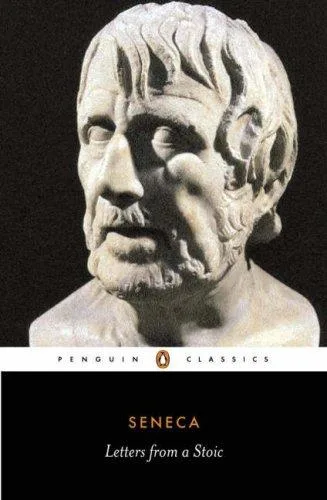
A note on translations, they matter enormously with this book. A bad translation makes Seneca sound like a dusty academic. A good one (the Penguin Classics edition is solid) makes him sound like he’s sitting across from you at a coffee shop telling you to get your life together. Choose wisely.
Some of the letters feel dated. Advice about slaves, Roman social customs, skip those without guilt. But the letters that land? They land harder than almost any modern self-help book on the shelf. Seneca writes with a clarity and directness that makes most contemporary authors look like they’re padding word counts.
Two thousand years and the core problems haven’t changed. We waste time. We react emotionally. We chase things that don’t matter. We defer the life we actually want.
Seneca saw all of it. He wrote the diagnosis. The prescription is sitting on your bookshelf.
The only question is whether you’ll fill it.
— filed under programming

David Vo
Writing about mindset, purpose, money, and building with AI, from Montreal. Breaking free from autopilot, one system at a time.
Related book notes
The Laws of Human Nature
You're not as rational as you think. Neither is anyone else. Understanding this changes every interaction you'll ever have.
Meditations
The most powerful man in the world journaling to himself about how to not be an idiot, and somehow it's the most relatable book ever written.