You Need Anti-Goals: Eliminate Distractions and Unlock Unlimited Success
If you’re anything like me, then you’ve probably set a ton of goals in your life. You’ve aimed for that perfect job, an ideal weight, or financial freedom. B...

If you’re anything like me, then you’ve probably set a ton of goals in your life. You’ve aimed for that perfect job, an ideal weight, or financial freedom. But have you ever stopped to think about what you don’t want?
Setting anti-goals is the secret weapon to unlocking your true potential.
When you focus on the things you want to avoid, like overworking, burnout, or feeling overwhelmed, you become more intentional with your time and energy.
Imagine cutting out the late nights at the office and saying no to projects that don’t excite you.
Suddenly, you have the space to concentrate on the things that truly matter.
In the words of Peter Drucker, “There is nothing so useless as doing efficiently that which should not be done at all.”
By identifying and eliminating what hinders your success, you pave the way for a more focused and fulfilling life.
Anti-goals help you eliminate the unnecessary, so you can concentrate on what brings you closer to unlimited success.
The Philosophy of Anti-Goals
To understand anti-goals, think about how avoiding negative behaviors can boost your success. This is where the strategy of inversion, inspired by thinkers like Charlie Munger, comes into play.
Understanding Anti-Goals
Anti-goals focus on what you don’t want to become or experience. Instead of aiming for success directly, you list actions and circumstances to avoid.
This unique approach helps in identifying what could ruin your success.
Toxic habits, exhausting schedules, or unproductive tasks—all can be classified as anti-goals.
By pinpointing and eliminating these negative aspects, you gain clarity.
For instance, if working late drains your energy, set an anti-goal to leave the office by 6 PM. This sharpens your boundaries, making it easier to allocate time for more productive activities.
The Wisdom of Inversion
Inversion flips typical goal-setting on its head. Instead of asking, “What will make me successful?” you ask, “What will prevent me from failing?”
This concept is heavily advocated by Charlie Munger, who believes in tackling problems backward to arrive at meaningful solutions.
This principle allows you to see your path more clearly. Avoiding negative outcomes is just as crucial as achieving positive ones.
For instance, if you know distractions hinder your focus, an anti-goal could be minimizing social media usage during work hours. This ensures you’re constantly moving towards success by clearing your path of obstacles.
“The key is not to will your way to success but to prevent failure”—Charlie Munger.
Identifying Your Anti-Goals
By pinpointing what you want to avoid, you harness a powerful tool to optimize your life and career. This process helps you steer clear of pitfalls that drain your energy and waste valuable time, ensuring your days are productive and fulfilling.
Decoding Your Worst Possible Day
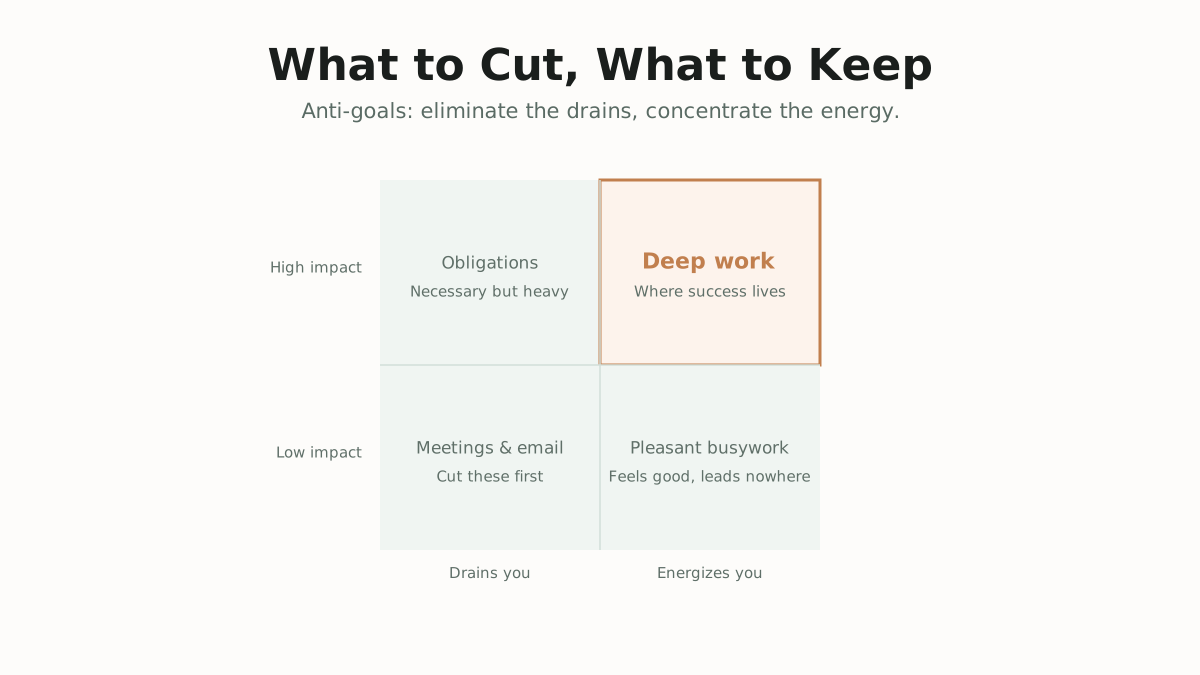
Imagine your absolute worst day at work. Reflect on every frustrating moment that makes you want to quit. Perhaps it’s being stuck in endless meetings that go nowhere. Maybe it’s the never-ending chain of emails demanding your attention.
Visualize as if it’s happening now.
Take note of how it feels. These elements reveal your anti-goals.
If chaotic scheduling or constant interruptions are part of your nightmare, make it a goal to avoid overloading your calendar. By eliminating these scenarios, you create space for meaningful work.
“The best way to predict the future is to create it.” — Peter Drucker
Energy Drains and Time Wasters
Once you’ve outlined your worst possible day, scrutinize what drains your energy and wastes time.
Is it the ceaseless ping of notifications? Or perhaps the long hours spent on tasks that could be automated? Dig deep and hone in on these distractions.
For instance, constant emails can be an energy sink. Implement rules to check your inbox only at set times.
If meetings waste time and often disrupt workflow, propose alternatives like concise status updates.
Prioritize tasks that align with your goals and cut out those that don’t contribute to your success.
Crafting Strategies Against Anti-Goals
To achieve unlimited success, identify what to avoid and create systems to steer clear of these pitfalls. Effective strategies can help you manage distractions and prioritize your most valuable tasks.
Setting Avoidance Goals
Creating avoidance goals means figuring out what not to do. Instead of just setting goals for what you want to achieve, think about behaviors and actions that hinder progress.
For example, avoiding procrastination or cutting down on unnecessary tasks can free up time for what truly matters.
Consider specific, actionable avoidance goals. If social media distracts you, an avoidance goal could be to limit its use to 20 minutes daily. Set clear boundaries and hold yourself accountable.
As Tim Ferriss said, “What you don’t do determines what you can do.”
Jot down the activities that waste your time or drain your energy, and make avoiding them a priority.
This approach not only helps in eliminating distractions but also in advancing toward your goals with focus and determination.
Emails and Meetings as Anti-Goals
Emails and meetings can be massive time sinks if not managed properly. Identify unnecessary emails and meetings as anti-goals and establish strategies to limit their impact on your productivity.
For emails, create specific times during the day to check and respond instead of being constantly interrupted.
Consider applying filters to automatically sort important messages and put the rest on the back burner. This helps maintain your focus for longer periods.
Regarding meetings, question their necessity.
Adopt a critical perspective: Will this meeting add value, or is it wasting time?
If a meeting is essential, ensure it has a clear agenda and time limit. For recurring meetings, evaluate their effectiveness regularly and adjust as needed.
The Intersection of Anti-Goals and Productivity
Leveraging anti-goals can transform how you manage your time and skyrocket your efficiency by eliminating distractions and minimizing time-wasters.
Reclaiming Your Calendar
Imagine opening your calendar and seeing it packed with back-to-back meetings, errands, and low-priority tasks. It feels overwhelming, right? That’s where anti-goals come in.
By identifying activities that drain your energy, you can intentionally keep them off your schedule.
For instance, block off time for deep work by rejecting unnecessary meetings. If endless emails and notifications disrupt your flow, designate specific times to check them.
“The key is not to prioritize what’s on your schedule but to schedule your priorities.” — Stephen Covey.
Creating these boundaries not only protects your most productive hours but also helps you stay focused on what truly matters.
Actionable Steps for Improved Focus
Start with a reflective exercise: write down what you don’t want in your workday. Maybe it’s avoiding busywork or late-evening tasks. These are your anti-goals. They give you a clear picture of what to eliminate and help you concentrate better.
Next, implement these anti-goals. Create a to-do list and a “not-to-do” list.
For example, if you find that constant social media checks break your concentration, set app limits or use website blockers. If multitasking reduces your output, commit to single-tasking for chunks of time, such as the Pomodoro Technique.
By setting and following these boundaries, you sharpen your focus, reduce distractions, and maximize productivity. This method is not just theoretical; it’s a practical way to achieve more by doing less.
Success Through Elimination
Recognizing what holds you back is key to moving forward. By cutting away unnecessary tasks, you gain clarity on what truly drives your goals and success.
The Virtue of Saying ‘No’
The word “no” is one of the most powerful tools you have. It helps you focus on what matters by rejecting what doesn’t.
Warren Buffett once said, “The difference between successful people and really successful people is that really successful people say no to almost everything.”
Imagine a tiny investment firm that takes on every client that comes their way. Soon, they’re juggling too many portfolios, making it hard to excel at any one of them.
By learning to say no to clients that aren’t a good fit, they can concentrate on delivering exceptional service to their ideal client, leading to higher success overall.
In your personal life, saying no can mean turning down extra work hours to spend quality time with family or declining social events to invest in self-improvement. Each “no” creates space for a more focused and meaningful “yes.”
Tiny Changes, Monumental Impact
Micro-improvements often lead to significant results. These small tweaks accumulate to create profound changes in your life and work.
Remember the idea that a plane deviating just by a degree can end up in a completely different destination?
Take a company that decides to cut one unproductive meeting a week. The time saved can be redirected to more strategic planning or creative thinking, which could lead to innovative products or services.
In your own journey, think about eliminating minor distractions like social media notifications. These tiny actions can free up time to focus on what’s crucial, like completing a certification or starting a side project.
It’s these small steps that steer you closer to your goals.
In Practice: Real-world Anti-Goal Setting
Setting anti-goals can help you identify and avoid pitfalls that derail your success. By focusing on what to avoid, you create a direct path to achieving what matters most to you.
Learning from Andrew Wilkinson
Andrew Wilkinson, the founder of Tiny, has mastered the art of anti-goals. Rather than listing what he wanted, Wilkinson focused on what he wanted to avoid.
For him, this included excessive meetings, crowded schedules, and administrative tasks that drained his energy.
His strategy involved setting clear boundaries to protect his time.
By minimizing distractions like unimportant emails or extended phone calls, Wilkinson freed up his mental space for deep work. This approach helped him direct his energy towards impactful tasks, improving efficiency and creativity.
“Focus is a matter of deciding what things you’re not going to do.” - John Carmack
Day-to-Day Defense Against Distractions
In daily life, anti-goals serve as a defense against distractions.
Think of your phone constantly buzzing with notifications.
By setting an anti-goal to reduce screen time, you cut down on interruptions.
This leads to more uninterrupted work periods and better productivity.
Another example is managing your work environment.
If a noisy office is a trigger, your anti-goal may be finding a quieter space or using noise-canceling headphones.
Small adjustments like these can have a significant impact on your focus and efficiency.
Lists are useful here:
- Limit social media to specific times.
- Prioritize tasks to avoid feeling overwhelmed.
- Delegate tasks that don’t require your unique skills.
By focusing on what drags you down, you naturally elevate what lifts you up.
This mindset shift is simple but profound, leading to more intentional and satisfying work.