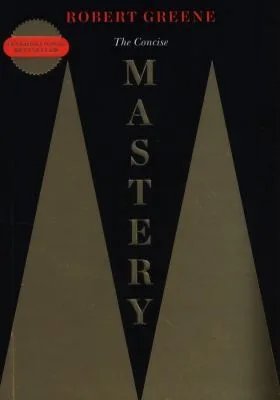
Mastery
Key Takeaway
Mastery isn’t a gift you’re born with. It’s a process you walk through, apprenticeship, creative combination, intuitive command. The path is available to anyone. But “available” and “easy” aren’t the same word.
The Big Picture
- Mastery follows a predictable arc: deep apprenticeship, mentorship, creative experimentation, and eventually intuitive expertise
- Your “life’s task” is the thing that fascinated you as a kid before the world told you to be practical
- After roughly 10,000 hours of deliberate practice, knowledge stops being something you think about and becomes something you feel
Why This Book Matters For Your Day-to-Day Life
I picked this book up during a stretch where I was deep in the apprenticeship phase of building a business and didn’t even know that’s what it was called. I just knew I was bad at things I wanted to be good at, and it was taking way longer than I expected.
Here’s the thing: nobody tells you that the beginning is supposed to feel like this. You see the end result, the person who built the company, wrote the book, shipped the product, and you assume they had something you don’t. Some spark. Some natural wiring that made the process smoother for them than it is for you.
Greene says no. He says the difference between the people who achieve mastery and the people who don’t isn’t talent. It’s tolerance. Tolerance for the long, boring, unglamorous phase where you’re absorbing everything and producing nothing impressive. The phase where your ego takes a beating every single day because the gap between where you are and where you want to be is painfully visible.
I lived this when I started learning to code and build websites. I’d look at what other people were shipping and feel like I was years behind. And I was. That’s not a problem, that’s the apprenticeship working exactly as designed. The problem would have been quitting because the gap felt too wide.
The nursing-to-business transition was my version of finding what Greene calls your “life’s task.” Not a sudden lightning bolt. More like a slow realization that the script I was following, stable job, predictable trajectory, someone else’s definition of success, wasn’t mine. The discomfort wasn’t a bug. It was a signal. Greene gave me language for something I’d already been feeling but couldn’t articulate.
And then there’s the impatience. God, the impatience. I wanted to skip the apprenticeship and go straight to mastery. I wanted the results without the reps. Greene would call that the impatience tax, and it’s the most expensive tuition you’ll ever pay, because you don’t just lose time. You lose the depth that only comes from doing the work the slow way first.
Core Concepts
The Apprenticeship Phase
Everyone starts as a beginner. Masters included. Da Vinci was an apprentice. Darwin spent years collecting beetles before he became Darwin. The difference is they didn’t resist the phase, they surrendered to it.
Greene breaks the apprenticeship into three stages: deep observation (watch, absorb, keep your mouth shut), skill acquisition (practice the fundamentals until they’re automatic), and experimentation (start testing your own ideas against what you’ve learned).
Most people try to skip to stage three. They want to be creative before they’ve earned the right to be creative. But creativity without foundation is just noise. You have to put in the boring hours first.
I think about this with every new skill I’ve picked up, writing, building websites, running a business. The temptation to skip ahead is constant. But the people I admire most all went through their own version of the apprenticeship. They just don’t talk about it because it’s not a good story. “I spent three years being mediocre” doesn’t make for an inspiring Instagram caption.
Life’s Task. Your Calling
Greene argues that every person has a “life’s task”, a deep inclination or fascination that’s been with you since childhood. Your job isn’t to discover it. It’s to remember it. Because somewhere along the way, you buried it under practical concerns, parental expectations, and the general pressure to be “realistic.”
This is similar territory to Coelho’s Personal Legend in The Alchemist and the Japanese concept of ikigai. But Greene is more structured about it. He doesn’t just say “follow your heart.” He says: look at what fascinated you before anyone told you what to care about. Find the thread. Then build a career around it, not by chasing passion blindly, but by strategically positioning yourself to use that fascination as fuel for deliberate skill-building.
This is where Greene and Newport are actually saying the same thing in different accents. Newport calls it career capital. Greene calls it life’s task. Both agree on the mechanics: fascination gives you the endurance to survive the apprenticeship, and the apprenticeship builds the skills that make the fascination sustainable. Passion without skill is a hobby. Skill without passion burns out. You need both, and they develop together, not separately.
The Mentor Dynamic
Greene is insistent on this: find masters who are ahead of you, learn everything they know, and then, this is the part people skip, move beyond them. The mentor relationship isn’t permanent. It’s a phase. You absorb their worldview, internalize their methods, then break away and forge your own.
The worst thing you can do is stay in the mentor’s shadow forever. That’s not mastery. That’s imitation.
I’ve experienced this informally, learning from people who were further along in business, absorbing their frameworks, then gradually realizing that some of their approaches didn’t fit my situation. The ones I learned the most from weren’t the ones who told me what to do. They were the ones who showed me how they think, then trusted me to think for myself.
Creative-Active Phase
After years of deep practice, Greene says you enter the creative-active phase, where you start combining knowledge from different domains into something original. This is where the magic happens. Not by being creative in a vacuum, but by having so much foundational knowledge that you can see connections other people miss.
The pattern shows up everywhere. Steve Jobs combined calligraphy with computer science. Darwin combined geology with biology. The innovation didn’t come from nowhere, it came from mastery in multiple areas overlapping.
This is also why Greene’s framework connects to Deep Work. You can’t enter the creative-active phase in shallow mode. Combining ideas from different domains requires the kind of sustained, distraction-free thinking that Newport describes. Shallow attention produces shallow output. Creative combination demands depth.
Mastery as Intuition
The final stage. After 10,000+ hours of deliberate practice, your knowledge becomes instinct. You stop consciously processing and start feeling the right move. A chess grandmaster doesn’t calculate every possibility, they see the board and know. A surgeon doesn’t think through every cut, their hands move before their conscious mind catches up.
Greene argues this isn’t mystical. It’s neurological. Repeated practice literally rewires your brain until complex skills become automatic. The knowledge is still there, it’s just been pushed below the surface of conscious thought.
This connects directly to Atomic Habits. Mastery is what happens when you compound tiny improvements over thousands of hours. Clear gives you the daily system. Greene gives you the long-term arc. Put them together and you have the full picture, small daily practice, sustained over years, eventually producing what looks like genius to everyone watching from the outside.
Social Intelligence
This is the most underrated concept in the book. Greene argues that technical mastery alone isn’t enough. Masters also develop social intelligence, the ability to navigate people, politics, and organizational dynamics.
Plenty of brilliant people fail because they can’t work with others. They’re so focused on their craft that they ignore the human dimension. But mastery doesn’t happen in isolation. You need mentors, collaborators, allies. And getting those relationships right requires a completely different skill set than getting your craft right.
Let’s be real: this section feels like it belongs in a different book. Greene’s strength is the apprenticeship-to-mastery arc, and the social intelligence material, while valid, reads like it was wedged in to round out the framework. But the core insight stands. Your skill is only as powerful as your ability to operate in the world with other humans.
What I’ve Found Most Useful
The apprenticeship reframe. Before this book, I saw my beginner phase as something to endure and get through as fast as possible. Greene reframed it as the most important phase, the one where the real wiring happens. That shift in perspective made me more patient with the process and less obsessed with the outcome. The apprenticeship isn’t the obstacle on the way to mastery. It is mastery, in its early form.
The fascination filter. When deciding what to invest time in, I now ask: “Am I fascinated enough by this to survive the apprenticeship?” If the answer is no, the skill isn’t worth pursuing, because I’ll quit before the compounding kicks in. Fascination is the fuel that gets you through the unglamorous middle.
The “combine, don’t specialize” principle. Greene’s creative-active phase taught me that the most valuable skills aren’t deep expertise in one narrow lane. They’re the ability to connect ideas across domains. Writing + business + technology is more powerful than any one of those alone. The combinations are where the leverage lives.
Memorable Quotes
“The future belongs to those who learn more skills and combine them in creative ways.”
“The time that leads to mastery is dependent on the intensity of our focus.”
“It is in fact the height of selfishness to merely consume what others create and to retreat into a shell of limited goals and immediate pleasures.”
Final Thoughts
I need to be honest about this book’s weaknesses, because there are a few.
It’s long. Greene could have cut 30% and the core framework would hit harder. The historical biographies, Da Vinci, Darwin, Mozart, Goethe, are beautifully researched, but they stack up. By the fourth or fifth extended example, you’re thinking “I get it, Robert. Mastery takes a long time. Can we move on?”
The examples themselves create a distance problem. When your case studies are literal geniuses, the reader’s internal response is: “Cool, but I’m not Leonardo da Vinci.” Greene addresses this, he argues that these figures weren’t born extraordinary, they became extraordinary through the process he describes. But it’s a hard sell when your examples are the most exceptional humans in recorded history. A few more stories about ordinary people achieving deep competence would have made the framework feel more accessible.
And there’s a privilege issue that Greene mostly sidesteps. The 10,000-hour apprenticeship path assumes you have the luxury of time. Some people don’t. Bills. Families. Systemic barriers that have nothing to do with willpower or fascination. Greene writes as if anyone can walk this path if they just want it badly enough. That’s partially true and partially naive.
But here’s what survives all of those criticisms: the core framework works. Apprenticeship, creative combination, intuitive mastery through deep practice, this is genuinely how skill development happens. The research backs it up, even if Greene’s historical examples are cherry-picked for maximum drama. Psycho-Cybernetics adds the missing inner layer, your self-image has to expand to include “I am someone who can master this” before the external process can take root. Greene gives you the roadmap. Maltz gives you the internal permission to follow it.
If you’ve read So Good They Can’t Ignore You, you already have the compressed version of Greene’s argument. Newport’s career capital theory is Greene’s mastery framework in different words, more concise, more practical, less historical storytelling. But if you want the full, panoramic view of how mastery actually develops across a lifetime, and you’re willing to commit to 350 pages to get it. Greene delivers something Newport doesn’t: the emotional arc of the journey. The loneliness of the apprenticeship. The thrill of creative combination. The quiet confidence of intuitive command.
Read it if you’re in the early stages of something and wondering whether the slow, grinding work is worth it.
It is. But you already knew that.
— filed under purpose

David Vo
Writing about mindset, purpose, money, and building with AI, from Montreal. Breaking free from autopilot, one system at a time.